
An emergency fund is money set aside for the unexpected: a broken boiler, a car repair or a drop in income. MoneyHelper suggests aiming for three to six months of essential outgoings, but you don’t need to start there. A first target of £500 to £1,000 covers most everyday emergencies. Sinking funds are different: they’re pots you fill month by month for costs you know are coming, like Christmas, car insurance or an MOT, so they never become emergencies in the first place.
This guide shows how to work out your emergency fund target, how to build it in stages, and how to set up sinking funds with worked UK examples. You can track each pot as a savings goal in the Budget & Savings Tracker.
Get this guide as a free PDF
Keep it, print it, read it offline. We’ll email it to you with a personal 10% discount code for any spreadsheet.
Emergency fund vs sinking funds
| Emergency fund | Sinking funds | |
|---|---|---|
| What it’s for | Unexpected costs and loss of income | Expected costs that don’t come every month |
| Examples | Boiler breakdown, vet bill, job loss, urgent travel | Christmas, birthdays, car insurance, MOT and service, holidays, school uniform |
| Target | Months of essential outgoings | The known cost of each item |
| When you use it | Only in a genuine emergency | On the date you planned |
Without sinking funds, predictable bills drain the emergency fund, and you’re back to square one when a real emergency comes.
How much should be in your emergency fund?
MoneyHelper’s common guide is three to six months of essential outgoings. “Essential” means what you’d still have to pay if your income stopped: rent or mortgage, council tax, energy, water, food, phone, insurance, transport and minimum debt payments. Leave out the wants you could cut straight away.
Worked example
Priya’s essential outgoings come to £1,650 a month.
- 3 months: £1,650 × 3 = £4,950
- 6 months: £1,650 × 6 = £9,900
Aim nearer six months if:
- you’re self-employed or your income varies;
- you’re the only earner in your household;
- you have dependants;
- you rent and would need to cover moving costs, or own an older home or car.
Three months may be enough if you have a stable job, a second household income, or other protection such as sick pay from your employer.
Build it in stages
A target of £5,000 to £10,000 can feel impossible. NS&I’s guidance suggests thinking about your emergency fund in stages, starting with the costs most likely to hit you. Try this:
- Stage 1: £500. Enough for most car repairs, a vet bill or a replacement appliance.
- Stage 2: one month of essential outgoings (£1,650 for Priya).
- Stage 3: three months (£4,950).
- Stage 4: six months, if your situation needs it (£9,900).
How long will it take?
Divide each stage by what you can save each month. Saving £200 a month, Priya reaches:
- Stage 1 (£500) in 3 months (£600 saved);
- Stage 2 (£1,650) in 9 months (£1,800 saved);
- Stage 3 (£4,950) in 25 months (£5,000 saved).
That’s a long time, which is why it helps to add windfalls (tax refunds, bonuses, gifts, money from selling things) straight to the pot.
If you’re struggling with essential bills or have debts you can’t keep up with, saving may not be the first priority. Free advice is available from MoneyHelper and debt charities.
Where to keep it
No specific accounts here, but your emergency fund should be:
- Separate from your current account, so you can see what’s there and aren’t tempted to spend it.
- Easy to reach within a day or two, without penalties for withdrawals.
- Protected. Check the bank or building society is covered by the Financial Services Compensation Scheme (FSCS), which protects eligible deposits up to £120,000 per person, per banking licence, since 1 December 2025.
- Earning some interest, but instant access matters more than the top rate.
How to set up sinking funds
A sinking fund turns a big future bill into a small monthly payment. The formula:
Monthly amount = cost ÷ months until you need it
Worked example: a year of sinking funds
Starting in November 2026, Priya sets up these pots:
| Sinking fund | Cost | Needed in | Months to save | Monthly |
|---|---|---|---|---|
| Car insurance renewal | £540 | October 2027 | 11 | £49.09 |
| MOT and service | £300 | June 2027 | 7 | £42.86 |
| Summer holiday | £1,200 | July 2027 | 8 | £150.00 |
| Christmas 2027 | £600 | December 2027 | 13 | £46.15 |
| Birthdays | £240 | Through the year | 12 | £20.00 |
| Total | £308.10 |
Months are counted from the first payment in November 2026 up to the month before the money is needed, so the full amount is ready in time. Round up to make it easier, for example £310 a month.
If that total is too high, push some goals back or reduce them. A cheaper holiday or a later date makes the monthly figure smaller; skipping the pot altogether means the bill lands on a credit card.
Tips for running sinking funds
- Automate it. Set up a standing order for the total on payday.
- Use one savings account with a tracker, or separate pots if your bank offers them. What matters is knowing how much belongs to each goal.
- Check progress monthly against each target and date.
- Start the next cycle as soon as you’ve paid a bill. After the car insurance is paid, the next year’s pot starts the following month.
- Put the monthly amounts into your budget as a fixed cost. Our guide on how to make a monthly budget shows where they fit.
An easy way to keep on top of it
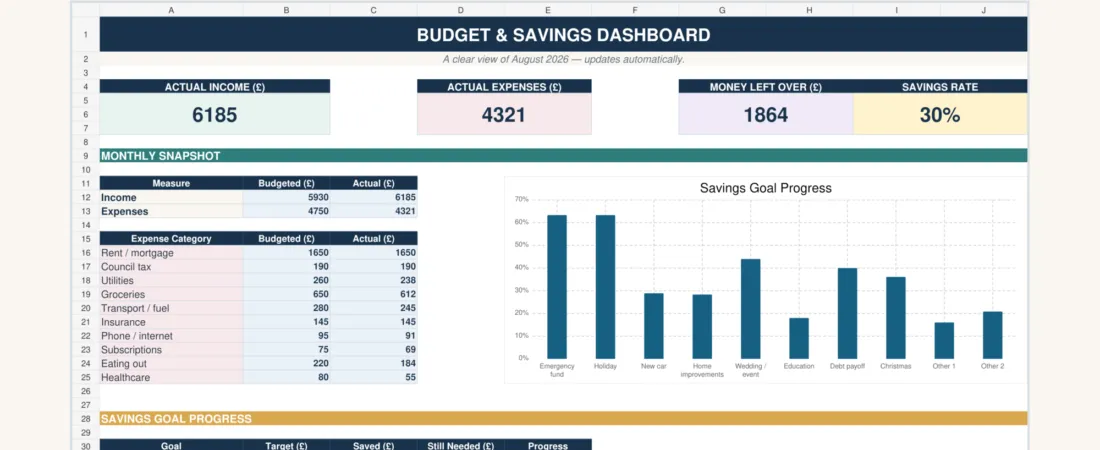
The Budget & Savings Tracker lets you plan your month and track every pot in one place. It’s a macro-free Excel file that can also be used in Google Sheets.
- 10 savings goals, each with a target, date and progress tracking, so your emergency fund and sinking funds all sit side by side.
- Automatic dashboard showing income, expenses, money left over, your savings rate and goal progress.
- Budgeted vs actual income and spending, so you can see what’s left to save each month.
- 20 editable expense categories to include your sinking fund payments as regular outgoings.
See the Budget & Savings Tracker →
Emergency fund FAQs
How much should I have in an emergency fund UK?
A common guide is three to six months of essential outgoings. Start with a smaller first target, such as £500 or one month’s essentials, and build from there.
Should I save an emergency fund or pay off debt first?
Many people do both: build a small emergency buffer first so a surprise bill doesn’t go on a credit card, then focus on paying off expensive debt before building the full fund. If you’re behind on payments, get free debt advice first.
What counts as an emergency?
Something necessary, urgent and unexpected: a broken boiler in winter, an urgent car repair you need for work, or a gap in income. Christmas, holidays and annual bills aren’t emergencies; that’s what sinking funds are for.
What is a sinking fund?
A pot of money you pay into each month for a known future cost, so the full amount is there when the bill arrives. Divide the cost by the number of months until it’s due to get the monthly amount.
This guide is general information, not financial advice. Everyone’s situation is different; for free, impartial guidance contact MoneyHelper, or speak to a debt advice charity if you’re struggling with bills.
Get this guide as a free PDF
Keep it, print it, read it offline. We’ll email it to you with a personal 10% discount code for any spreadsheet.